
Infrastructure · AI · Integration · Private Systems
Technology infrastructure for businesses that need control, resilience and room to grow.
Progressive OS designs, integrates and operates private infrastructure, collaboration platforms and AI-enabled systems that connect technology to the way a business actually works.
Positioning
Technology should reduce dependency, not create it.
Growing companies often accumulate tools faster than architecture. Data becomes fragmented, integrations become fragile, infrastructure becomes difficult to understand, and every new system adds another dependency.
We approach the problem from the opposite direction: understand the business, define the architecture, connect the systems, then choose the technology.
Control where it matters
Keep critical data, identity and infrastructure under the level of control your business actually requires.
Integrate before replacing
Existing systems often contain years of operational knowledge. Connect them intelligently before deciding to replace them.
Automate useful work
Automation and AI should remove real operational friction rather than create another tool employees have to manage.
Engineer for operations
Production systems need monitoring, recovery, security, updates and documentation — not only a successful demo.
Capabilities
From infrastructure to intelligent business systems
Six engineering practices that share one goal: technology the business can understand, control and rely on.
Infrastructure & Private Cloud
Linux infrastructure, virtualization, networking, storage, databases and private application environments designed as one maintainable system.
Explore infrastructureAI & Knowledge Systems
Private and hybrid AI systems that connect models to company knowledge, applications and workflows.
Explore AICollaboration & Nextcloud
Private collaboration environments combining files, communication, office tools, identity and business workflows.
Explore collaborationIntegration & Automation
APIs, identity, data exchange and automation that make existing systems operate as a coherent environment.
Explore integrationCustom Business Systems
Purpose-built internal platforms, portals and workflow applications designed around real operational processes.
Explore systemsSecurity & Reliability
Hardening, access control, network architecture, backup, recovery and operational practices built into the system from the beginning.
Explore reliabilityArchitecture
One architecture. Not another collection of tools.
Every layer exists to serve the one above it. Security, monitoring, backup and operations run across the whole stack — from business processes down to infrastructure.
Business ↓ Processes ↓ People ↓ Applications ↓ Data ↓ Integration ↓ Infrastructure ↓ Operations

Coherent systems
Technology becomes an asset when the pieces operate as one system.
Servers, platforms and AI services deliver little on their own. Value appears when identity is shared, data flows between applications, and operations are designed together with the infrastructure.
- Shared identity and access boundaries across systems
- Data flows designed with ownership and failure modes in mind
- Monitoring, backup and recovery treated as first-class requirements
Decision philosophy
The right architecture depends on the problem.
On-premises
Suitable when
- data control is important
- existing infrastructure is available
- predictable workloads exist
- integration with internal systems is critical
Private cloud
Suitable when
- operational independence matters
- multiple workloads need shared infrastructure
- cloud-like flexibility is needed without surrendering control
Hybrid
Suitable when
- cloud APIs provide useful capabilities
- sensitive data should remain private
- workloads have different security or compute requirements
We do not force every company into the same infrastructure model.
How we work
From uncertainty to an operating system
Five stages that take a business problem to a system that runs in production — and keeps running.
Understand
Business goals, constraints, workflows and existing systems.
Design
Architecture, responsibilities, integration boundaries and implementation plan.
Build
Infrastructure, applications, integrations and automation.
Harden
Security, monitoring, backup, recovery and operational documentation.
Improve
Observe real usage and evolve the system as the business changes.
Collaboration layer
A digital workplace the company actually owns.
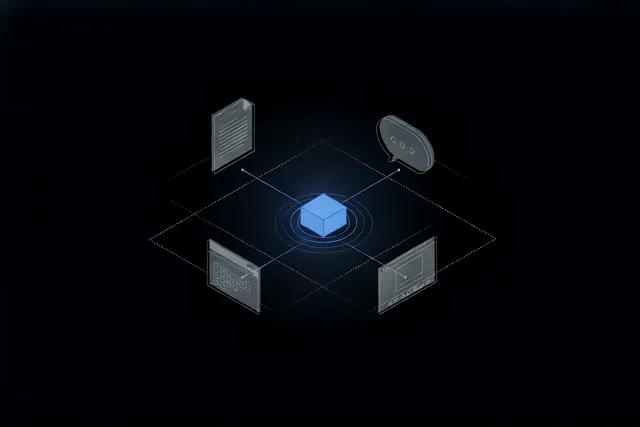
Files, communication, calendars and office documents tied to a single identity — running on infrastructure you control, integrated with the systems your teams already use.
- Private files, synchronization and sharing with clear permissions
- Messaging, calls and project communication in one environment
- Single sign-on across collaboration and business applications
Engagement models
Engage where you need us
Architecture & Advisory
For companies deciding
- what to build
- what to migrate
- what to keep
- how to structure infrastructure or AI adoption
Implementation & Migration
For projects requiring actual deployment, configuration, integration and migration — turning an agreed architecture into a running system.
Operations & Continuous Improvement
For systems that need ongoing maintenance, updates, monitoring and architectural evolution as the business changes.
FAQ
Common questions
Short answers about how we work, what we build and where the boundaries of our capabilities lie.
No. We work with on-premises, hosted, private-cloud and hybrid architectures. Deployment should follow the business, security and operational requirements rather than a fixed ideology.
Yes. Replacing working systems is often unnecessary. We normally begin by understanding the existing environment and identifying where integration, modernization or restructuring creates the most value.
Yes. Depending on the workload, models, vector databases, knowledge retrieval and supporting services can run inside private infrastructure. Hybrid designs can also combine local systems with external model APIs.
Not necessarily. Kubernetes is useful for specific classes of workloads, but it also introduces operational complexity. We prefer the simplest architecture that can meet availability, scalability and operational requirements.
Yes. Integration should follow APIs, open standards and reliable data boundaries. The goal is a working business environment, not loyalty to a particular software category.
Yes. A core goal is to bring strong infrastructure and architecture practices to companies that need reliability and control without unnecessary enterprise complexity.
Usually with a short technical and business discovery: what is currently running, what is not working well, what needs to change and what constraints the architecture must respect.
Next step
Tell us what needs to work better.
You do not need a finished technical specification. Describe the problem, the current environment and what you would like to change.